
The fundamentals of marksmanship must not be ignored. Working on fundamentals in regular, meaningful, and measurable, ways is what those carrying for personal protection must commit themselves to.
In defensive pistol shooting many believe themselves to be at a higher degree of competency than they actually are. Of the millions who are lawfully carrying a handgun every day, only a tiny percentage train on a regular basis. A somewhat larger cohort will go to the range once in a while, hang a target, and blast away. Most don’t train and rarely, if ever, practice.
But, as has been observed many times, marksmanship skills are exceptionally perishable. Like any physical activity, to become “unconsciously competent”, there is a journey. A person needs train and practice to build embedded skills. Those skills allow them to perform at a high level in a moment of need. I’ve written in the past on the importance of those skills in context, here and here.
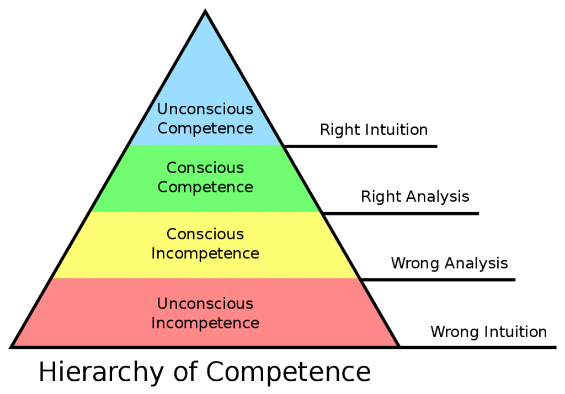
Regardless of how high one’s embedded skills are, they are rooted in a foundation of marksmanship fundamentals. Grip, sights, trigger and follow through. People who’ve made their way in an often violent world understand this concept and they align themselves to it.
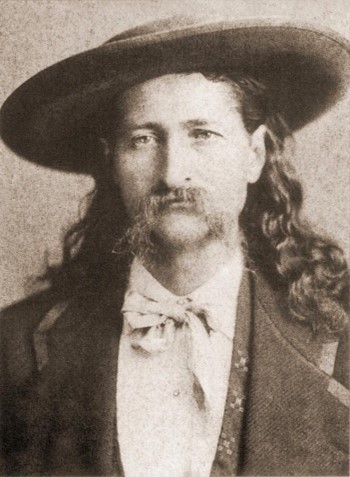
One such person was James Butler “Wild Bill” Hickock. In his career as a scout, lawman, freighter and gambler Hickock was well known as a deadly accurate shot. He was cool in a crisis, and willing to do violence when necessary. Hickock routinely carried two Colt Navy revolvers in a sash at his waist. One of his revolvers is in the collection of the Cody Firearms Museum here in Wyoming.
In 2024 Claude Werner, AKA The Tactical Professor, wrote an article on his blog about an exercise attributed to Hickock.
According to legend, Hickock emptied his revolvers daily by firing them, then cleaned and reloaded them. But he, apparently, also believed in shooting to measurable standards. Claude’s article documents a standard of what was “good shooting” to Hickock and one of his contemporaries, Major Frank North. Six shots fired with only one hand from “ten paces”, 25 feet give or take. The target was a five inch square envelope with a one inch postage stamp on it. To be considered “good” the shooter would have to land all their shots within the five inch square, with at least one touching the stamp. With no time limit it sounds easy, but can be deceptively difficult.
Since Claude first published his article, and created a target to support the exercise, I’ve incorporated it into my routine. I use it as a warm up for sessions where I don’t have a cold skills evaluation planned. I’ve added a layer as I fire it twice; first with dominant hand and second with non-dominant hand. This quickly surfaces deficiencies in fundamentals. The results inform what I need to work on that day as I run through my training plan.
Enter my friend Gary Hughes, co-jefe at MOD Outfitters. Gary, and his wife, ranches in the high country at the opposite corner of the state from me. Gary is very attuned to the history of the Inter Mountain West. He also has an abiding appreciation for many of the region’s characters, including Wild Bill. Like Hickock, Gary likes to shoot his revolver daily as part of his routine. He fires 15 shots, reloads and goes about the day’s chores.
I mentioned the Gunfighter’s Challenge in an online conversation recently and Gary adapted it into his routine. He created a five inch cardboard template with a one inch center square to paint the target onto steel. Paper targets can be difficult to deal with in our Wyoming wind. Gary also took the exercise to a different level. He fires five dominant hand, five non-dominant hand, then five using both hands to make his 15 daily rounds.
On my most recent range trip, I gave Gary’s method a go. I fired six shots per target with an iron sighted M&P 9. Starting with the right hand I was doing well, touching the stamp twice, until the fifth shot. I completely gave up on my grip and launched one just outside the square. I then planted the sixth shot at the bottom of the square. Much better results were had shooting with the non-dominant hand; I work on this hand a lot in dry practice. When it came time to fire with both hands again my grip betrayed me on the first shot. I left it low under the stamp, so I focused on grouping the remaining five.
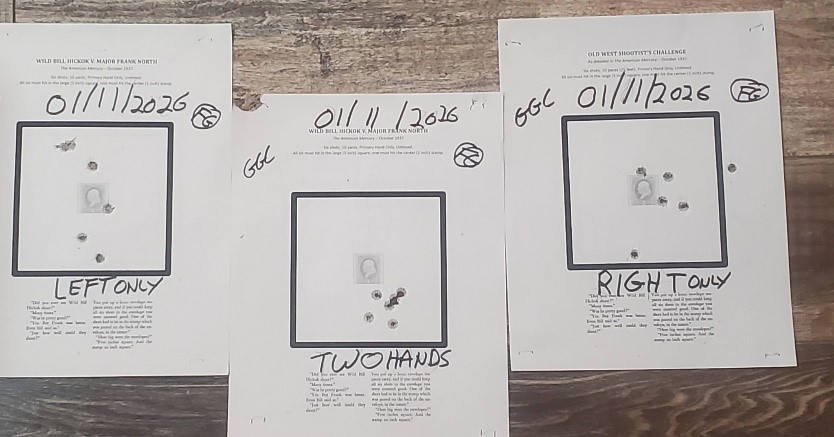
This 18 round version is a solid test of fundamental marksmanship. It can be done on any range at a pace of your choosing. Where it gets fun is with a double action revolver, and particularly with a snub. Give it a try and let us know how you do.
Photo credit: Hierarchy of Competence sourced at Examined Existence, Hickock photo sourced at pixels dot com, target photo by author.
 SRF Training and Consulting LLC
Leave a comment